Welcome to my first article in my blog, Its sad to say that I don’t really have anything to say much myself, thats why this blog is more of a journey than a food channel that you see in televisions. Lets start what I’ve been doing this pass few days. I can say at first that I like asian cusine as much as mexican/spanish/american cusine mixed together, because I don’t know if you’ve heard this place called Taco bell, but damn it taste good.The picture is over there at the bottom.

I don’t usually know what to say in articles, but in my opinion is more of saying my opinion in an opinion, ahahahah, see what I did there. Lets get started , asian cusine is a style of cooking and tradition associated with a specific culture. Asia is the largest continent in the world shelters many cultures and cuisines. Some of the major regional cuisines are East Asian, Southeast Asian, South Asian, Central Asian and Middle Eastern cuisines. Besides the difference, all of these varieties of Asian foods share some common features. Ingredients like Rice, Ginger, Garlic, Tofu, Chilies, Dried Onions, Soy and Sesame seeds are used in almost all Asian foods. Cooking practices like Steaming and Stir frying are common in every Asian restaurant.
Rice is a staple ingredient in every Asian food; Different varieties are popular in various regions. Basmati is a popular rice variety in subcontinents while long grain rice is popular in China and short grain in Japan and Korea. Curry dishes with its origin in South Asian countries are also common in Southern, Western and Southeastern regions. These are Yogurt based soup with meat or vegetables as optional ingredients. I can say that asian cusine is a part that has many parts and its growing everyday, help it grow in my next article in where we will start making some actual food (east asian food) to be exact.
10 facts of asian cusine
1. It Must be Fresh in China — Canned/Frozen Food Spurned
Wet markets (where live/freshly-butchered animals and freshly picked foods are sold) abound in China — almost one per city block. Many Chinese go every day. Fridge freezers are catching on, but fresh veg is still a must. Tins are despised.
Also, according to Chinese medicine food must be eaten in season to combat too much yin (cold weather) and yang (hot weather), dryness, or dampness. E.g. huge white radishes (with high yang) are very popular in winter.
2. Chinese Eat Bones… Or Spit Bone Splinters
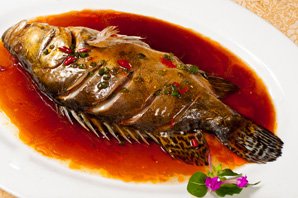
Fish
Chinese don’t like waste, so whole animals are often served. E.g. fish are not filleted, just gutted, with head and bones intact. Sometimes bones are soft enough to chew up; sometimes they must be de-mouthed (onto a side plate).
Chinese believe meat near the bones is the best, and that marrow is very nutritious, so bones are deliberately chopped to splinters to release the marrow — watch out while eating. Bone broth is popular.
3. Everything’s Bite-Size for Chopstick Eating
Chinese don’t eat with knives and forks, traditionally, which is seen as violent or barbaric, but with chopsticks. As chopsticks don’t actually chop, all food is very soft or chopped up into bite-size pieces before cooking.
4. China Uses 45 Billion Pairs of Chopsticks a Year
That’s an unremarkable average of 2 or 3 pairs a month for its approaching 1.4 billion population. The government has imposed a disposable chopstick tax to reduce usage.
Most (disposable) chopsticks are softwood or bamboo, so that’s about 100 square miles or the area of Queens of trees/bamboo… or 50,000 tonnes — imagine trucks of chopsticks lined up end-to-end for 30 miles.
5. The Same Thing Can Be Cooked a Dozen Ways
Like Bubba’s shrimp in Forest Gump, there are many ways to cook Chinese food. For example, a fish could be steamed, boiled, stewed, quick-fried, stir-fried, deep-fried, roasted, sautéed, marinated in brine, pickled in vinegar, soy-sauced, or sweet-and-sour-sauced.
6. Food Decoration Can Verge on the Ridiculous
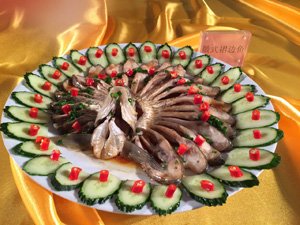
A fish dish is decorated with cucumber slices and red peppers.
Chinese chefs, particularly Jiangsu cuisine experts, go overboard on presentation. They believe “the first bite is with the eyes”. Dishes are served in precise patterns or lifelike shapes, brightened by intricate vegetable carvings and decorative herbs.
7. Dish Names Can Be Misleading
Chinese like to give to dishes catchy names. Some names have nothing to do with their ingredients. For example:
- Husband Wife lungs- doesn’t actually mean cannibablism, but a another term for a weird cut that is a seasoned with chilli oil.
Remember, a ‘field chicken’ (田鸡 tiánjī) is a frog! A tour guide or translator will help you avoid surprises. We offer our services below.
13. Food Is Superstitiously Symbolic
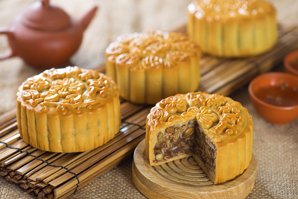
Mooncakes
Chinese attach particular meanings to certain foods based on shapes, colors, pronunciations, and legends. Superstition and tradition dictate certain foods must be eaten for certain festivals/events to invoke a blessing.
For example, ingot-shaped dumplings mean wealth at New Year, and round mooncakes represent family reunion at Mid-Autumn. See The Symbolism of Chinese Foods.
14. Dishes Are Shared Lazy-Suzy-Style
In traditional Chinese meals, dishes are shared communally. Dishes are served in the middle of a table, and people sit with their rice bowls around it.
In restaurants, especially for tables seating 10 or 12, there are usually lazy Susan turntables to permit easy sharing among diners. See What Restaurants Are Like in China.
15. The Guest Is Seated at the Table’s “Head”
The honored guest is customarily seated furthest from the door with the fish, chicken, duck… heads pointing his way.
Sources:
Heheh ofcourse from me
And sponsored by china highlights(char)

 Killing dumplings